
Field Notes
Three HVAC Failures That Keep Showing Up
A home inspector breaks down three recurring HVAC installation and maintenance failures — each one silently working against the house.
Episodes in this article (3)
This piece synthesizes a series of short episodes. Each thumbnail below opens its source on YouTube.


Pull the access panel on a residential HVAC system and you get an honest look at how a house has been treated. Most of what I find isn’t dramatic. It’s the quiet stuff — a wrong fitting here, a detector in the wrong spot there, a filter that stopped doing anything eighteen months ago — that actually hurts people.
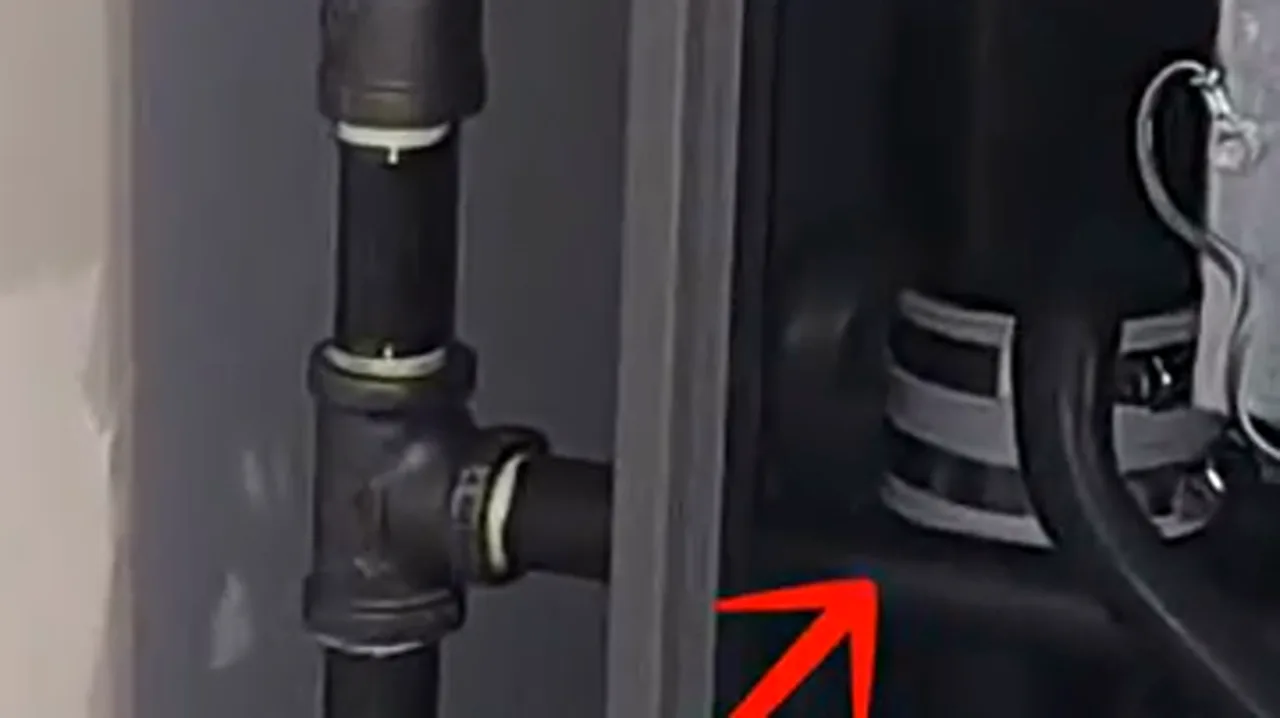
The Corrugated Connector That Becomes a Gas Leak
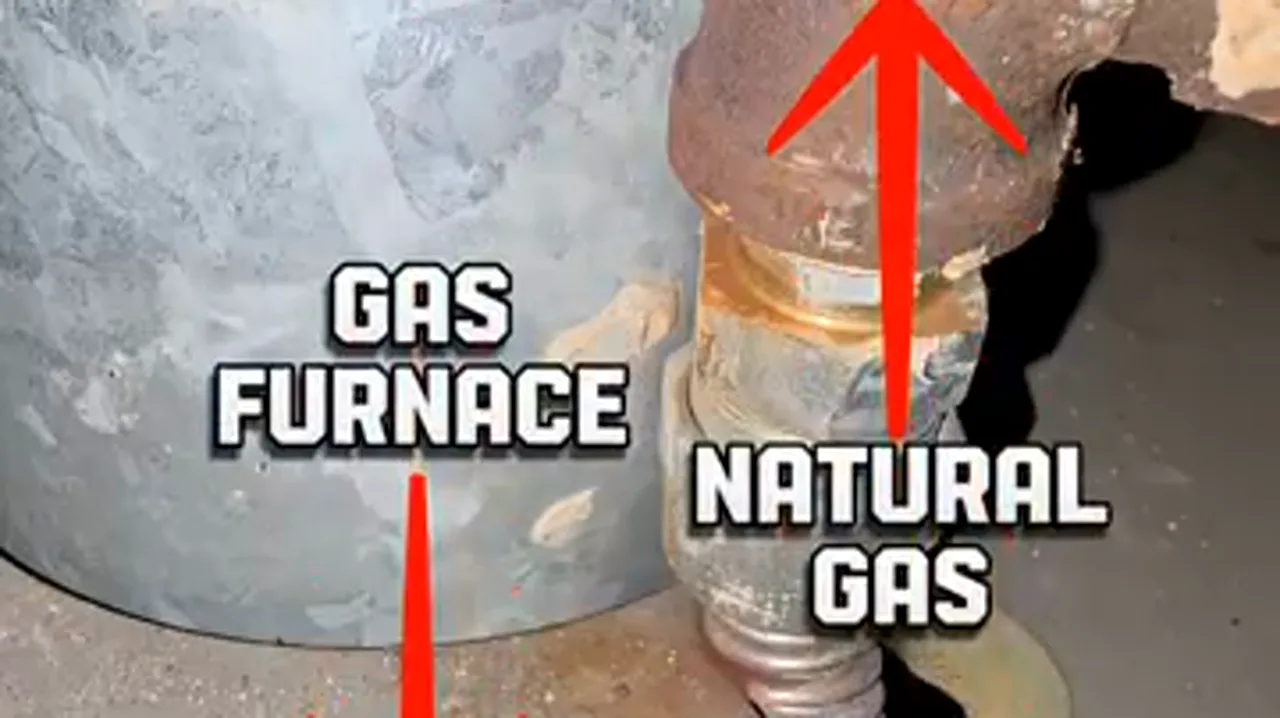
Somewhere between “I’ll figure this out myself” and “the furnace lights, so it’s fine,” someone ran corrugated flexible gas line directly into the furnace cabinet. You’ve seen the stuff — the yellow CSST-adjacent flexible tubing that’s cheap and bends around tight corners. It has its place. That place is not the last connection before the burner assembly.
Here’s the physics: houses move. Slab foundations shift seasonally. Framing expands and contracts with temperature and humidity. A furnace in a utility closet gets bumped by the water heater, by the service tech kneeling next to it, by the house itself settling a quarter inch over twenty years. Every one of those movements translates into a small lateral rub where that corrugated tubing contacts the cabinet edge, a fastener, a floor joist. The tubing abrades. The corrugations thin. Eventually a pinhole opens in a line carrying natural gas at a constant supply pressure, typically around 0.25 psi on the house side.
The furnace kicks on at 2 a.m. The igniter fires. The fix is always the same: rigid black iron pipe for the final connection at the appliance, with a proper union fitting so the furnace can be serviced. Code in most jurisdictions requires this. I find the wrong installation often enough that it’s clearly not being caught at inspection.
Where You Mount a Smoke Detector Is the Whole Game
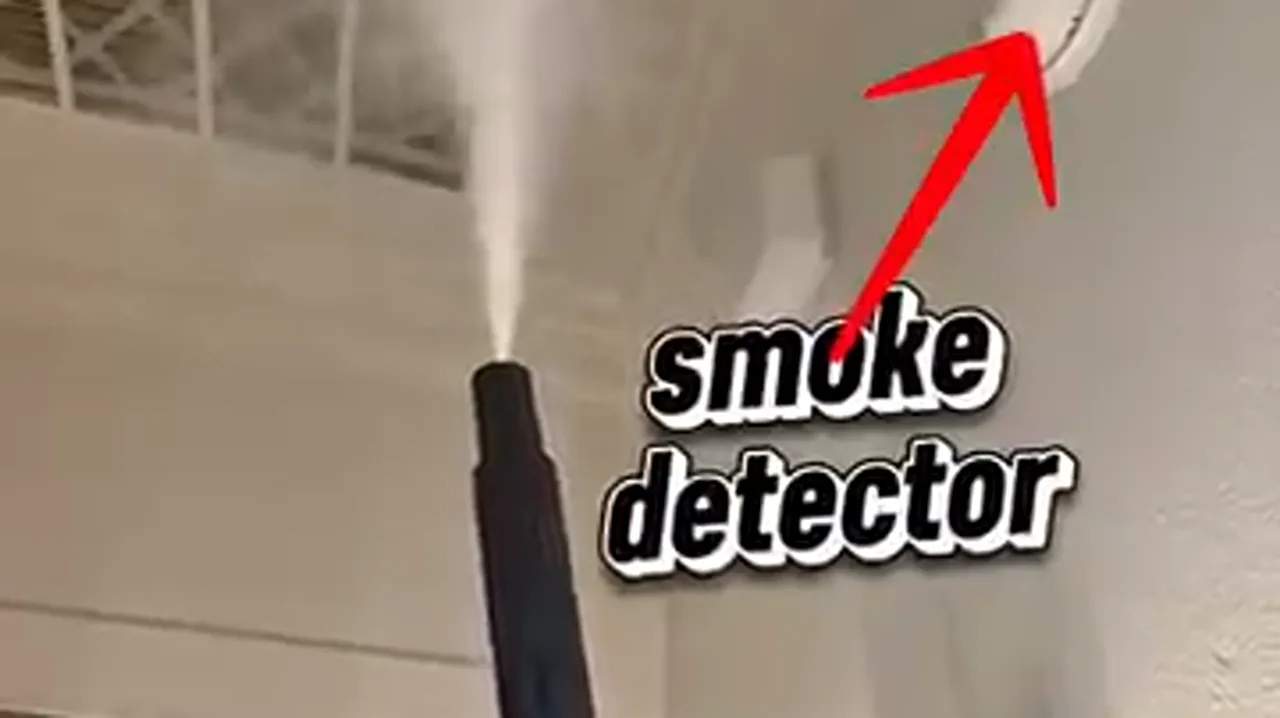
Air returns do their job by pulling air — aggressively, continuously. A return grille rated for a 3-ton system is moving somewhere around 1,200 cubic feet per minute through an opening that might be eighteen inches square. That is an enormous local airflow.
A smoke detector mounted within three feet of an air return isn’t detecting your house. It’s detecting whatever air the return happens to be pulling from the hallway at that moment, filtered through the turbulence of a high-velocity draw. Smoke from a fire at the other end of the house — or in the next room — doesn’t stand a reasonable chance of reaching that detector before the return dilutes and redirects it. The detector cannot compete with the pressure differential.
The NFPA 72 language on this exists for exactly this reason: keep detectors away from supply and return registers, away from ceiling fans, away from windows and exterior doors. The smoke has to be able to reach the sensor by natural convection, not fight a mechanical airflow that’s working against it.
This particular failure is dangerous in a specific way: the homeowner tests the detector, it beeps, they feel safe. The detector works — it just can’t do its job from where it’s mounted. The distinction matters at 2 a.m.
The Filter That Turned Into a Wall
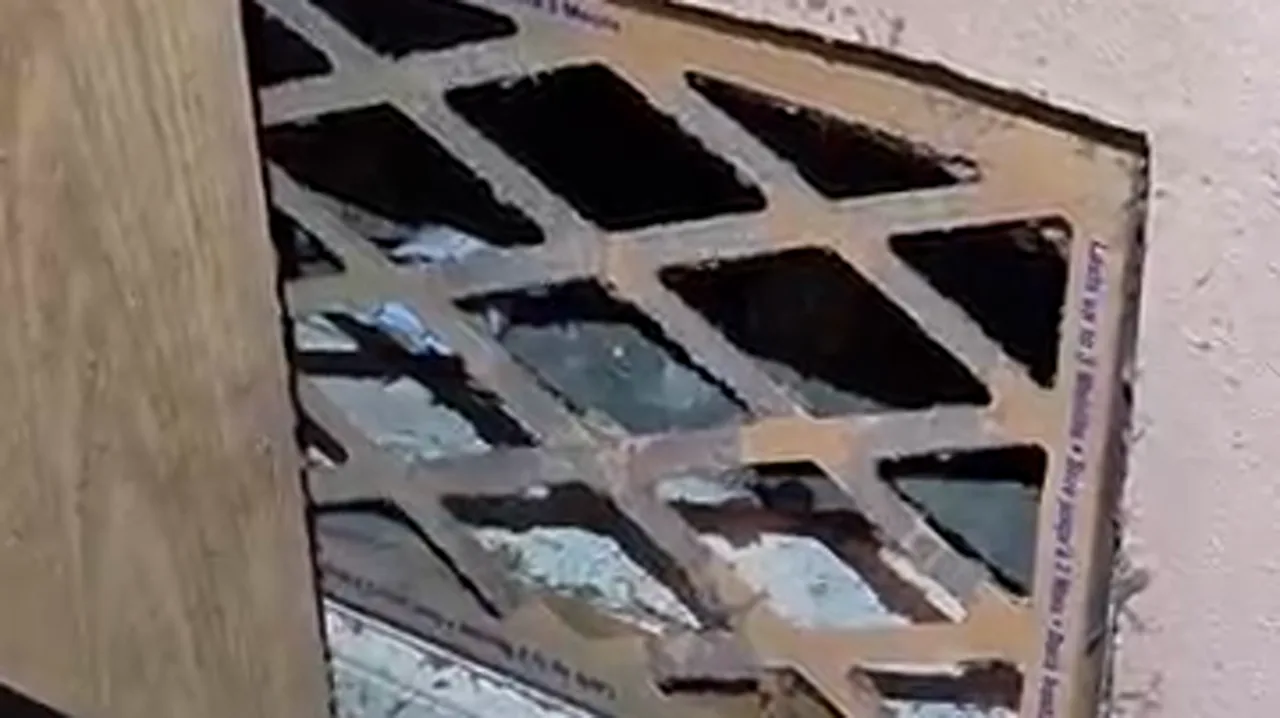
A standard 1-inch pleated air filter — the kind that costs four dollars — is rated to capture particles down to about 3 microns and is designed to be replaced every 60 to 90 days under normal use. After roughly 90 days, the filter surface is loaded enough that airflow restriction begins to measurably affect system performance. After six months, a clogged filter is choking the air handler. After a year or more, what you’re looking at is essentially a compressed mat of dust, pet hair, and dander so dense it has structural integrity.
I’ve pulled filters that looked like insulation batts. Filters I had to peel off the return grille because suction had held them against the frame so long they’d conformed to the shape. The homeowner is standing behind me, genuinely baffled that the system isn’t cooling the house properly.
Here’s what a blocked filter does mechanically: it drops the static pressure differential across the evaporator coil, which reduces airflow across the coil, which causes the coil to run colder than designed, which causes the coil to ice over, which eventually either trips the low-pressure safety or simply stops transferring heat altogether. The refrigerant circuit keeps running. The house doesn’t cool. The compressor runs longer and harder than it should. Compressors that run in short-cycling or extended-runtime conditions fail early.
A forty-dollar-a-year filter habit prevents a four-thousand-dollar compressor replacement. The math isn’t complicated.
All three of these failures share the same architecture: a small, cheap, easily-corrected problem that gets ignored until it becomes a large, expensive, dangerous one. The gas fitting is a fire risk. The detector placement is a life-safety issue. The filter is a thousand-dollar repair waiting to happen. None of them are subtle once you know what you’re looking at.